
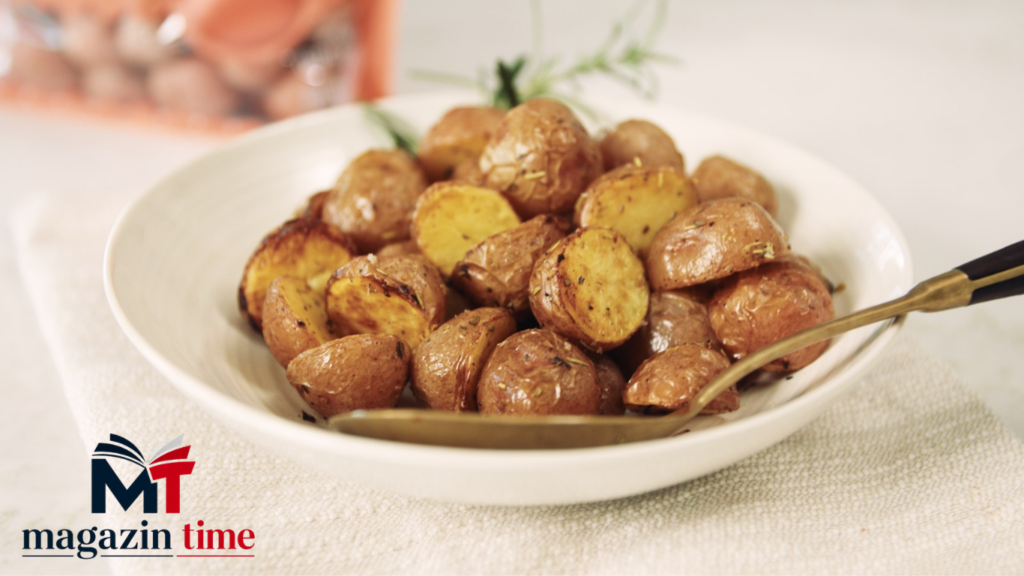

Greek roasted potatoes have earned a special place on tables across the world. Known in Greece as patates sto fourno or patates lemonates, these golden wedges offer a perfect balance of crisp edges, soft centres and bright lemon-oregano flavour. They appear beside grilled meats in tavernas, at family Sunday lunches and on restaurant menus far beyond the Mediterranean. Their simple ingredients and reliable results explain why so many home cooks return to them again and again.
What makes Greek roasted potatoes stand out is the cooking method. Rather than dry-roasting, the potatoes bathe in a mixture of olive oil, lemon juice, garlic and stock. As the liquid reduces, the potatoes absorb the flavours thoroughly before the remaining oil helps them brown. The result is a side dish that tastes of sunshine and the Greek islands, yet requires only everyday ingredients.
History and Origins of Greek Roasted Potatoes
Potatoes arrived in Greece relatively late. Historical records show they were introduced in the early nineteenth century, becoming more widely known around 1829. At first many people viewed them with suspicion, but the crop gradually took hold. Over time Greek cooks developed ways of preparing them that suited the country’s climate, olive oil and love of lemon and oregano.
The roasted version, often cooked in the same pan as chicken or lamb so the potatoes soak up the meat juices, became a staple of home kitchens and tavernas. In Greek households a large tray of Greek roasted potatoes is as common as a salad or loaf of bread. The dish reflects the practical, flavour-first approach of Mediterranean cooking: few ingredients, generous seasoning and a method that maximises taste with minimal fuss.
How Greek Roasted Potatoes Are Traditionally Made
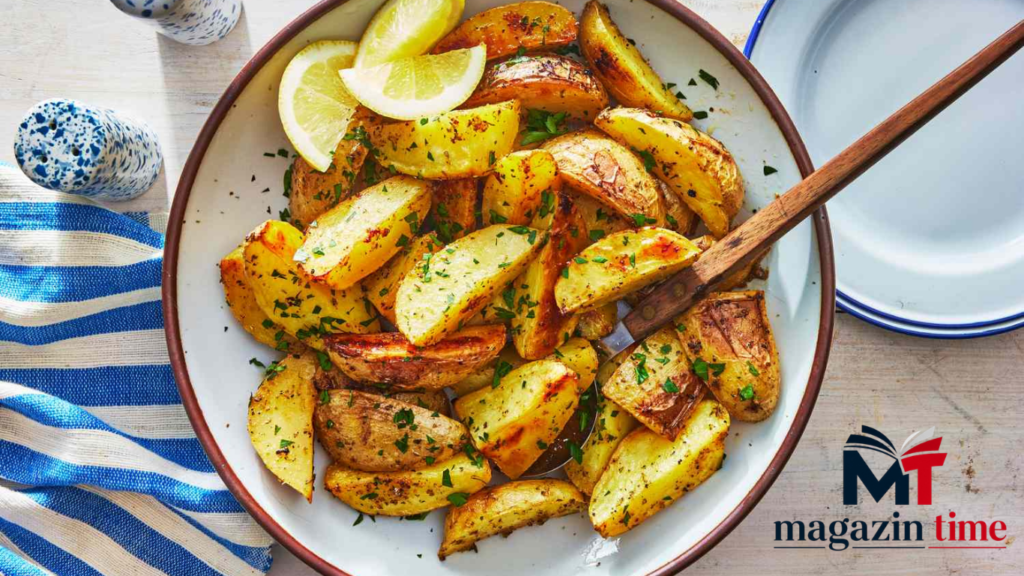
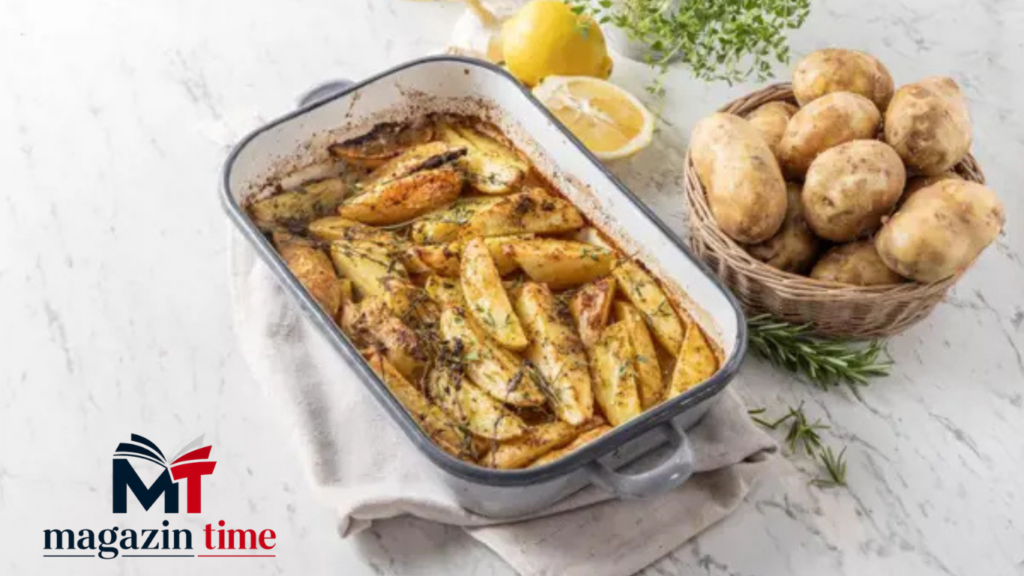
Authentic Greek roasted potatoes begin with good potatoes—preferably a floury variety such as Maris Piper in the UK or Yukon Gold elsewhere. They are peeled and cut into thick wedges, then arranged in a single layer in a roasting tin.
The classic liquid mixture combines roughly equal parts olive oil and lemon juice with chicken or vegetable stock, crushed garlic, dried oregano, salt and pepper. Some family recipes add a pinch of allspice or a few whole cloves for depth. The potatoes are tossed thoroughly so every surface is coated, then roasted at a moderately high temperature—usually around 200°C (fan 180°C)—until the liquid has almost disappeared and the edges turn golden.
The half-braise, half-roast technique is key. Early in the cooking the potatoes simmer gently in the flavoured broth and soak up the lemon and garlic. Later the liquid evaporates, leaving the oil to crisp the outsides while the insides stay creamy. The finished dish should never be dry or overly crunchy; the ideal texture is soft and yielding with appetising browned edges.
Tips for Perfect Results Every Time
A few practical points make a noticeable difference. Cutting the potatoes into even wedges ensures they cook at the same rate. Soaking them briefly in cold water can remove excess starch and help them crisp more evenly, though many traditional cooks skip this step. Using a metal roasting tin rather than ceramic helps the bottoms brown properly.
Freshly squeezed lemon juice is essential; bottled juice lacks brightness. Greek oregano, if available, brings a distinctive earthy note that ordinary dried oregano cannot quite match. Some cooks prefer to leave the garlic cloves whole so they roast gently and can be mashed into the potatoes at the table. Others grate the garlic so its flavour distributes evenly.
If the potatoes appear to be drying out before they are tender, a splash more stock can be added. Conversely, if too much liquid remains near the end of cooking, the tin can be returned to a hotter oven or the potatoes transferred to a higher rack for the final ten minutes.
Cultural Place and Everyday Appeal
Greek roasted potatoes sit comfortably within the broader Mediterranean diet. They rely on olive oil, citrus and herbs rather than heavy cream or butter, making them a relatively light yet satisfying accompaniment. In Greece they are rarely the star of the meal; instead they support grilled fish, souvlaki, roast chicken or lamb. Their ability to absorb juices from whatever shares the pan makes them especially popular for one-tray family dinners.
Outside Greece the dish has travelled widely. British, Australian and American cooks have embraced it as a reliable weekend side, often serving it with roast meats or as part of a vegetarian spread. Food writers frequently note that once people taste properly made Greek roasted potatoes they find ordinary dry-roasted versions rather plain by comparison.
Variations and Modern Twists
While the classic lemon-oregano version remains the most recognised, home cooks adapt the recipe freely. Some add mustard for a subtle tang, others include orange juice alongside lemon for a sweeter citrus note. A scattering of Parmesan towards the end of cooking creates a savoury crust that is popular though not traditional. Fresh herbs such as parsley or dill can be stirred through just before serving for colour and freshness.
Vegetarian and vegan versions simply replace chicken stock with vegetable stock or water. Those seeking extra crispness sometimes par-boil the potatoes briefly before roasting, though purists argue this changes the characteristic soft texture. Whatever the variation, the core principles—generous olive oil, bright lemon and patient roasting—stay the same.
Quick Facts
| Detail | Information |
| Common Greek Names | Patates sto fourno, Patates lemonates |
| Key Ingredients | Potatoes, olive oil, lemon juice, garlic, oregano, stock |
| Typical Cooking Time | 50–70 minutes |
| Texture | Soft and creamy inside, golden edges |
| Best Potato Types | Floury varieties such as Maris Piper or Yukon Gold |
| Serving Style | Side dish with grilled or roasted meats, or vegetarian mains |
| Dietary Notes | Naturally dairy-free; easily made vegetarian or vegan |
Why Greek Roasted Potatoes Endure
Greek roasted potatoes continue to appear on menus and in home kitchens because they deliver consistent pleasure with little effort. They demonstrate how a few well-chosen ingredients and a thoughtful method can transform an everyday vegetable into something memorable. Their place in Greek family cooking also gives them an emotional resonance: many people associate the scent of lemon and oregano roasting with gatherings, holidays and the comfort of shared meals.
The dish rewards patience rather than complicated technique. It invites cooks to adjust seasoning to taste, to experiment with the amount of liquid, and to discover the exact moment when the potatoes reach their ideal state. In an age of elaborate recipes, that simplicity remains appealing.
Conclusion
Greek roasted potatoes remind us that the best food often grows from practical traditions rather than novelty. From their nineteenth-century arrival in Greece to their present status as an international favourite, they have retained their essential character: bright, aromatic and deeply satisfying. Whether served beside a Sunday roast or as the centrepiece of a simple supper, they offer reliable flavour and a touch of Mediterranean warmth.